
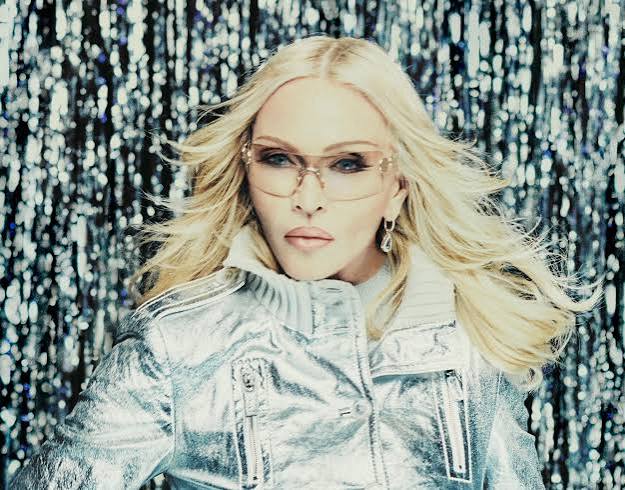
A sequel album is almost always a bad idea. It sets expectations impossibly high, invites unflattering comparisons, and signals an artist reaching backward instead of forward. When Madonna announced that her fifteenth album would be called Confessions II, a direct follow-up to her beloved 2005 masterpiece Confessions on a Dance Floor, a fair number of fans winced. Madonna built her entire career on refusing to look back. A sequel felt, to some, like a surrender.
It is not. Confessions II, released July 3, 2026 through Warner Records, is the rare legacy sequel that actually earns its title. It is her strongest, most cohesive, most purely enjoyable record since the original Confessions twenty-one years ago, and it manages that while carrying far more emotional weight than its predecessor ever attempted.
Back to the Floor
The reunion at the center of the album is with Stuart Price, the English producer who masterminded the original Confessions and its ABBA-sampling monster Hung Up. Their creative chemistry is immediately audible. Like the 2005 record, Confessions II is built as one continuous 64-minute mix, each track dissolving into the next the way a great club DJ set does, so the album flows as a single unbroken journey rather than a collection of separate songs. It draws from across the entire history of dance music, deep house, disco, electro, and Nineties club sounds all folded into one seamless motion.
Madonna sets out her thesis early. People think dance music is superficial, she announces, but they are wrong. The dance floor, in her telling, is not just a place. It is a threshold, a ritualistic space where movement replaces language. That has been the animating idea of her entire career, and Confessions II is the sound of her returning to the place she always goes to rediscover herself.
The Highs
The opener I Feel So Free is a deep house cut that nods to Lil Louis’s French Kiss while echoing her own Future Lovers, and it functions as a perfect entry point, euphoric, weightless, and immediately locked into the album’s continuous groove. Bring Your Love, the Sabrina Carpenter collaboration that first debuted live at Coachella, is a house-pop highlight interpolating Inner City’s Good Life, and the generational meeting of the two artists never feels like a stunt. Danceteria is the album’s most joyous act of memory, a tribute to Madonna’s early Eighties club days that name-checks Keith Haring, Jean-Michel Basquiat, and the DJ Mark Kamins who first spun her demo, all riding an interpolation of Lou Reed’s Walk on the Wild Side.
These are the moments where the album delivers exactly what the Confessions name promises: big, glossy, intelligent dance music from someone who understands the form better than almost anyone alive. The guest list, which also includes Feid and Stromae, is deployed with restraint, and the production from Price alongside contributors like Cirkut, Andrew Watt, and Mirwais never loses the thread of the continuous mix.
The Depths
What separates Confessions II from a simple victory lap is how much grief runs underneath the celebration. The original Confessions was pure escape. This one keeps looking back at times gone by, and not always happily. Fragile, tucked in at track eleven, is a genuinely moving lament for her estranged brother Christopher Ciccone, with whom she reconciled shortly before his death in 2024. It is the emotional center of the record, and the fact that it arrives deep in an album otherwise built for movement gives it a quiet devastation.
The album’s closing stretch trades some of the euphoria for reflection. On the deluxe edition, The Test is a duet with her daughter Lourdes Leon in which Madonna apologizes for raising her inside the machinery of fame, quoting her own 1998 lullaby Little Star while the adult Lola answers back with devotion. And L.E.S. Girl closes the album on a pensive guitar ballad, the morning after the party, a young Madonna waking up in last night’s eyeliner on the Lower East Side, broke and not quite belonging. After an hour of disco fireworks, it lands as a properly poignant comedown, and a reminder that the woman on top of the speaker stack was once just a girl who wanted in.
The Verdict
Confessions II should not work as well as it does. Legacy sequels are supposed to be hollow. Instead, Madonna and Stuart Price have made a record that honors the original while deepening it, matching its nonstop groove and then layering in two decades of loss, love, and hard-won perspective. It is celebratory and mournful at the same time, a party that knows the night has to end, and it is the most fully realized thing Madonna has released in a very long time.
At sixty-seven, on the dance floor where it all began, the Queen of Pop sounds completely, thrillingly at home. Time goes by so slowly. Some artists only get better with it.
Confessions II is out now via Warner Records. Released July 3, 2026. Produced by Madonna and Stuart Price.
For more music reviews and entertainment coverage, visit PressPlayReview.com.